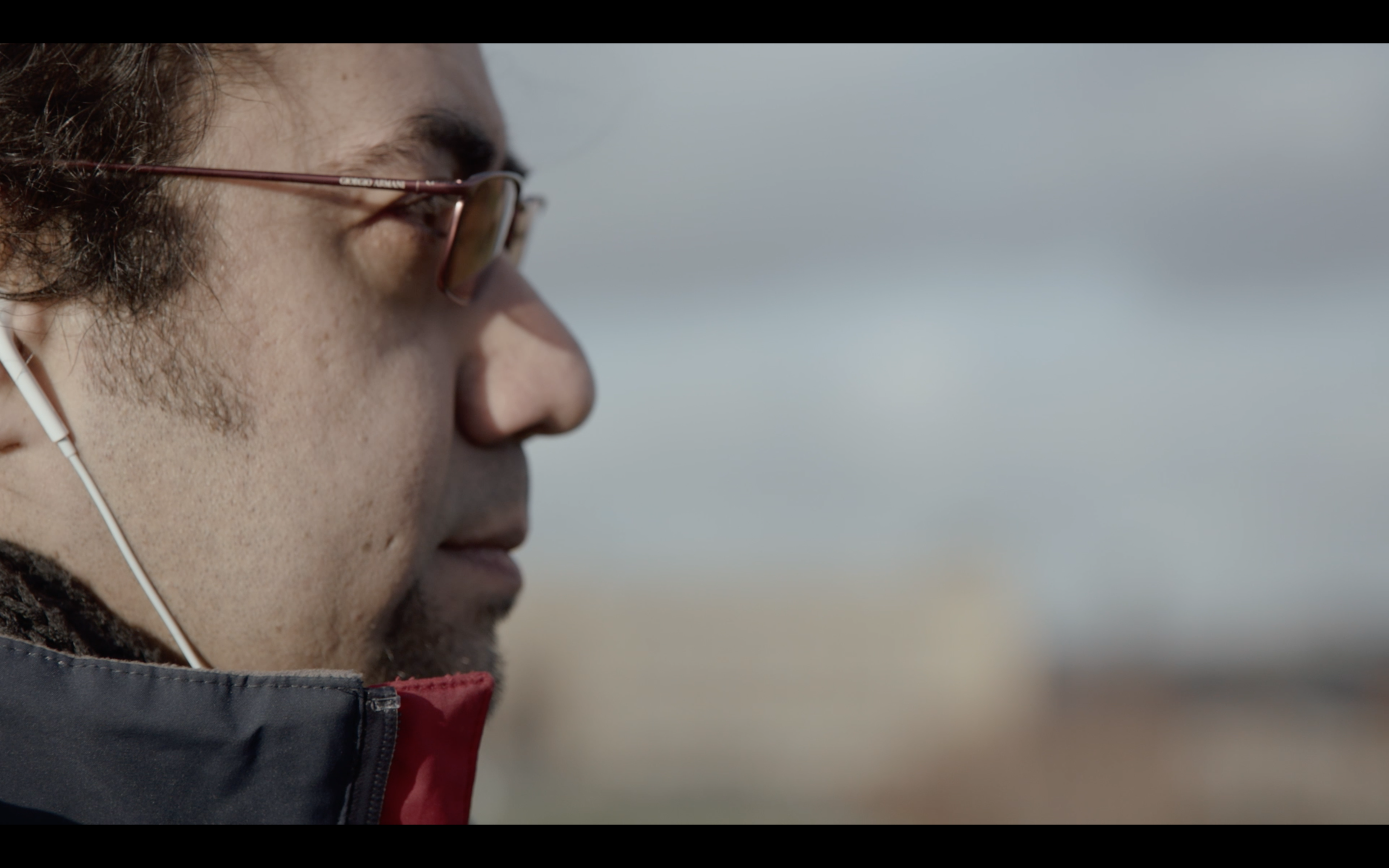
A Syrian-Uzbek Scholar, Activist, and Community Leader in Germany
Personal Background and Heritage
Monis Bukhari was born in 1978 in Damascus, Syria, and his heritage is a blend of Syrian and Uzbekistani roots, deeply connected with the Arab Uzbekistani community of Qashqadaryo, and he identifies as an Arab-Turk from the vast expanses of Turkestan. He describes himself as an Uzbek raised in Syria, now living in Germany.
Monis studied art, filmmaking, cinematography, and photography, laying a solid foundation for his diverse career. He fled Syria with his wife and daughter, indicating he has a family.
Early Career in Syria (Pre-2011)
Journalism and Media Work
Before arriving in Berlin in 2013, Monis Bukhari lived in Damascus, where he worked as a freelance journalist for many foreign newspapers, including the Los Angeles Times. He ran his design studio and publishing firm in Damascus.
Photography Passion
Monis started photography when he was seven years old in 1985 with a simple Kodak camera, then developed his skills using SLR cameras from brands like Nicca, Minolta, Zenit, and Canon, before finally settling on Nikon Digital Cameras. His professional journey spans over 17 years in photography and media.
He is described as someone who owns a knowledge network that includes more than 14 electronic websites.
The Syrian Revolution and Forced Exile (2011)
Activism and Persecution
When Syrians began their uprising against the Bashar al-Assad regime in 2011, Bukhari transformed himself from artist to Internet activist, forming the Syrian Charter Organization (SCO) with other like-minded individuals.
Bukhari had to flee Syria after a spy in his activist group informed security forces that he had reported information to the Los Angeles Times and sent them photos and video footage about what happened in Damascus. He was charged with treason by Assad’s regime because he worked with foreign media. He was accused by Syrian authorities of being a spy and sentenced to death in absentia.
After receiving a warning message from friends who had been arrested, he fled first to Beirut, then to Amman. The journalist fled with his wife and daughter to Jordan.
Syrian Charter Organization (SCO)
In 2011, Bukhari founded the Syrian Charter Organization (SCO), a group of activists who are all Syrians living either inside or outside the country.
The SCO was responsible for “Radio Baladna” (Our Homeland, an Internet radio station) and “New Syria News,” a Twitter news agency with more than 100,000 tweets posted over one-and-a-half years. The organization employed a team of women in Syria who collated information from reporters via Skype and Facebook.
Bukhari’s website and Facebook pages were frequently attacked by the Syrian Electronic Army (SEA), a group of hackers loyal to Assad. The SCO website was hacked once, and their Facebook page was closed twice, leading Bukhari to move websites three times to more secure servers and switch from Joomla to WordPress.
Arrival and Settlement in Germany (2013-2015)
Journey to Berlin
Bukhari was invited to work in Germany on a project and has stayed there since after Jordan declined his return. He traveled through many countries of the Middle East before finally settling in Berlin, Germany, by 2013.
When Monis Bukhari came to Berlin three years before 2016 on a working visa, his application took 20 minutes, with everyone helping him because he was Syrian. In June 2016, his visa expired, and he was advised to apply for asylum rather than renew it, which took three months to process.
Bukhari arrived in Berlin two years prior to 2015 and was granted a German passport, though he was officially recognized as a refugee in August 2015.
Support from Reporters Without Borders
Bukhari received support from Reporters Without Borders (RWB) in Berlin, which helped him find a lawyer and navigate the asylum process. When he needed to present himself at a job center, the journalist was accompanied by an RWB colleague.

Syrian House (Syrisches Haus)—Major Community Initiative
Foundation and Growth
Monis Bukhari founded the Syrian House group on Facebook in mid-April 2014. He is the founder of Syrisches Haus (Syrian House) in Germany, an information platform from and for fellow Syrians who arrived as refugees, with the Facebook group having over 132,000 members—representing a huge part of the Syrian community in Germany.
The Syrian House group acts as a lifeline for more than 100,000 Syrians who are new to Germany, providing information on everything from finding Arabic-speaking doctors to how to apply to local universities.
Solo Moderation Efforts
Monis Bukhari is the sole moderator of this massive group with nearly 100,000 members (as of 2015). He devotes so much time to this group because he wants Syrians to integrate well into their new host country.
Educational Mission
In the Syrian House group, they try to teach Syrians how democracy works in Germany, explaining the differences between the SPD and CDU or other political parties like Die Linke. Many Syrian refugees think Merkel alone is responsible for everything and makes all decisions, as if it were Syria.
Recognition by Mark Zuckerberg (2016)
In 2016, on Bukhari’s birthday in February, Mark Zuckerberg published a 6,000-word letter mentioning his activities, where Zuckerberg wrote: “In Berlin, a man named Monis Bukhari runs a group where he personally helps refugees find homes and jobs. Today, Facebook’s tools for group admins are relatively simple. We plan to build more tools to empower community leaders like Monis to run and grow their groups the way they’d like, similar to what we’ve done with Pages”.
Integration and Community Building Activities
Bicycle Integration Program
Bukhari set up a Berlin-based Facebook bicycling group to help fellow Syrians arriving in the city adjust to their new lives. He asked Berliners to lend bikes for one-day bike tours so newly arrived refugees could meet fellow residents and get to know their way around.
“Thank You Germany” Event (October 2015)
In 2015, Bukhari organized a “Thank you Germany” event on October 10, in which Syrians handed out flowers randomly to Germans at stations across the country and played music for free. The event had a dual purpose: to thank German people for supporting and helping Syrian refugees, and to push people who refuse refugees to accept them.
Integration HUB and Photography Projects
Monis Bukhari and Sabrina Ravail are founders of the Integration HUB, a non-profit organization dedicated to facilitating the integration process.
They organized a photography exhibition featuring work from Syrian refugees who captured snapshots of Germany from 2013 to 2016, with photographers including Bashar Sawas, Abdullah Al Nsirat, Fadi Elias, Majd Al Kotaifan, Nour Aldin Alsahli, and Abdulwahhab Ezzedin. The diverse collection ranged from scenes of everyday German life to symbolic images of hope and resilience, revealing a nuanced picture of Germany as seen through the lens of the Syrian community.
Response to November 2015 Paris Attacks
After the November 13, 2015, Paris attacks, Bukhari stated that Syrian refugees in Germany could not sleep that night and were afraid these attacks would change their lives and European tolerance toward them.
As moderator, he had to remove two members from the Syrian House group for celebrating the attacks, though he affirmed these were exceptions and they were insulted by all other group members. Many Syrians living in Berlin went to the French Embassy (located in front of the Brandenburg Gate) on Sunday to lay candles and flowers.
Controversy and Criticism (October 2016)
In October 2016, controversy erupted in Germany after a controversial interview by Der Spiegel magazine with activist Monis Bukhari, which described him as “leader of the Syrian lobby in Germany”.
The controversy stemmed from a statement about keeping the war in Syria rather than having it transfer to Germany, though Bukhari clarified his comments were taken out of context and mistranslated. The interview was conducted in English before being translated into German, and the statement had a spatial rather than temporal meaning.
Some commentators launched an online petition demanding Der Spiegel and German media stop dealing with Bukhari, claiming he did not represent Syrians in Germany but only himself. They also claimed that founding a large Facebook group did not make him a leader of Syrians.

German Foreign Ministry Honor (2019)
Official Christmas Card Selection
The German Foreign Ministry adopted a photograph taken by Syrian refugee photographer Monis Bukhari as the final version of the postcard that Germany would use to greet diplomats around the world for Christmas and New Year’s, distributing 1,500 cards worldwide.
German Foreign Minister Heiko Maas honored Bukhari in an official ceremony, presenting him with a copy of the postcard signed by the Foreign Minister.
Bukhari competed with many German artists and photographers, but his photograph won the approval of the specialized committee. This was the first time the federal government chose an artistic work by a non-German artist to print on an official card, and the first time an Arab Syrian was selected.
The photograph depicted a romantic sunset behind the Oberbaum Bridge in Berlin, showing the architectural difference between East Berlin and West Berlin, symbolizing how Berlin today coexists while its parts seek convergence.
Current Professional Work and Location
Monis Bukhari is a consultant based in Berlin (now Heidelberg), Germany, with a background in promotion, communications, journalism, and social media, alongside more than seven years in NGO organizing and social services.
He works as a Freelance Academic Proofreader and Investigative Journalist. According to his Facebook profile, he currently lives in Heidelberg, Germany, while maintaining strong connections to Berlin.
Artistic Pursuits
His artistic forms include photography, watercolor painting, design, and calligraphy, with a particular fascination for Moiré patterns—an enchanting visual effect created by overlapping lines and shapes.
Monis expresses his love for culture and heritage through various artistic forms including photography, watercolor painting, design, and calligraphy. His work captures fleeting moments and preserves them as eternal memories, showcasing his talent in visual storytelling.
Academic Research and Scholarly Interests
Culinary History
Monis Bukhari is a distinguished independent researcher specializing in culinary history, cultural heritage, and community engineering, with interdisciplinary expertise spanning gastronomy, geography, and cartography.
To him, cooking is more than just preparing meals—it’s a vibrant intersection of history, culture, and self-expression, and he’s constantly fascinated by how each dish can tell a story and how traditional flavors encapsulate entire heritages.
Etymology and Linguistics
As a dedicated scholar of etymology, Bukhari employs a unique methodological approach, tracing contemporary terminology to its historical origins through comprehensive investigation of linguistic evolution, cultural context, and social transformation.
Bukhari describes his blogging approach: “I love blogging and I love researching the origins and sources of words. To grasp the origins, I climb the trellises of stories in reverse, returning from today to as far back as possible into yesterday, and on the path of return comes the recovery; I put here the summary of a word’s life story”.
Geography and Cartography
His professional life is deeply rooted in geography and cartography, finding immense satisfaction in mapping the myriad terrains of the world and understanding how landscapes influence and are influenced by the people who live within them.
Digital Presence
Bukhari shares his insights and research findings through his digital platform, albukhari.com, where he continues to contribute to the scholarly discourse on culinary arts, social history, and cultural heritage. He also publishes on Medium and maintains an active presence on various social media platforms including Instagram (for photography and watercolor art), Facebook, and other platforms.
Research Topics
Based on his blog’s content tags, Bukhari actively writes about:
- Political history (تاريخ سياسي)
- Religious history (تاريخ ديني)
- Etymology (إتيمولوجيا)
- Arabic dialects (لهجة عربية)
- Social history
- Food history and culinary traditions
- Cartography and historical geography
Organizational Affiliations
His affiliations include prestigious organizations like UNESCO, Charta der Vielfalt, re:publica, NDI (National Democratic Institute), bpb (Bundeszentrale für politische Bildung), IWPR (Institute for War & Peace Reporting), RSF (Reporters Without Borders), WDR (Westdeutscher Rundfunk), SWR (Südwestrundfunk), and DW (Deutsche Welle).
Complete Professional Timeline
- 1978: Born in Damascus, Syria
- 1985 (age 7): Started photography with a Kodak camera
- Pre-2011: Worked as freelance journalist in Damascus, ran design studio and publishing firm
- 2011: Fled Syria after being charged with treason; founded Syrian Charter Organization (SCO); fled with wife and daughter
- 2011-2013: Lived in Beirut, Lebanon and Amman, Jordan
- 2013: Settled in Berlin, Germany on a working visa
- Mid-April 2014: Founded “Syrian House in Germany” Facebook group
- August 2015: Officially granted refugee status in Germany
- October 10, 2015: Organized “Thank You Germany” event
- February 2016: Mentioned by Mark Zuckerberg in 6,000-word letter
- October 2016: Controversial Der Spiegel interview sparking debate
- 2019: Photography selected for German Foreign Ministry’s official Christmas card, honored by Foreign Minister Heiko Maas
- Present: Resides in Heidelberg, Germany; continues research, writing, and community work
Impact and Legacy
Monis Bukhari represents a remarkable story of transformation—from artist to activist, from refugee to community leader, and from exile to bridge-builder. His efforts in supporting Syrian refugees and promoting digital assistance have been recognized globally.
Through Syrian House (with over 380,000 members), the Integration HUB, and his various creative and academic pursuits, he has helped tens of thousands of Syrian refugees navigate life in Germany. He preserves and shares his rich cultural heritage through his research into culinary history, etymology, and cartography.
His work demonstrates how technology and community organizing can be powerful tools for integration, and how one individual’s commitment can create lasting impact for an entire diaspora community. Despite facing controversy and criticism, he has maintained his dedication to helping Syrian refugees integrate into German society while conducting serious academic research on Arab cultural heritage, food history, and linguistic evolution.
Key Achievements:
- Founder and sole moderator of Syria’s largest refugee Facebook community in Germany (380,000+ members)
- Co-founder of Integration HUB
- Recognized by Mark Zuckerberg for community leadership
- First non-German artist to have work selected for official German Foreign Ministry greeting cards
- Established Syrian Charter Organization and Radio Baladna during Syrian revolution
- Published researcher on culinary history, etymology, and social history
- Maintains digital platform (albukhari.com) with extensive scholarly content
Monis Bukhari continues to work as an independent researcher, consultant, and community advocate, bridging Syrian and German cultures while documenting and preserving Arab culinary and linguistic heritage for future generations.